CLAT Legal Reasoning Preparation: Complete Guide to Score High
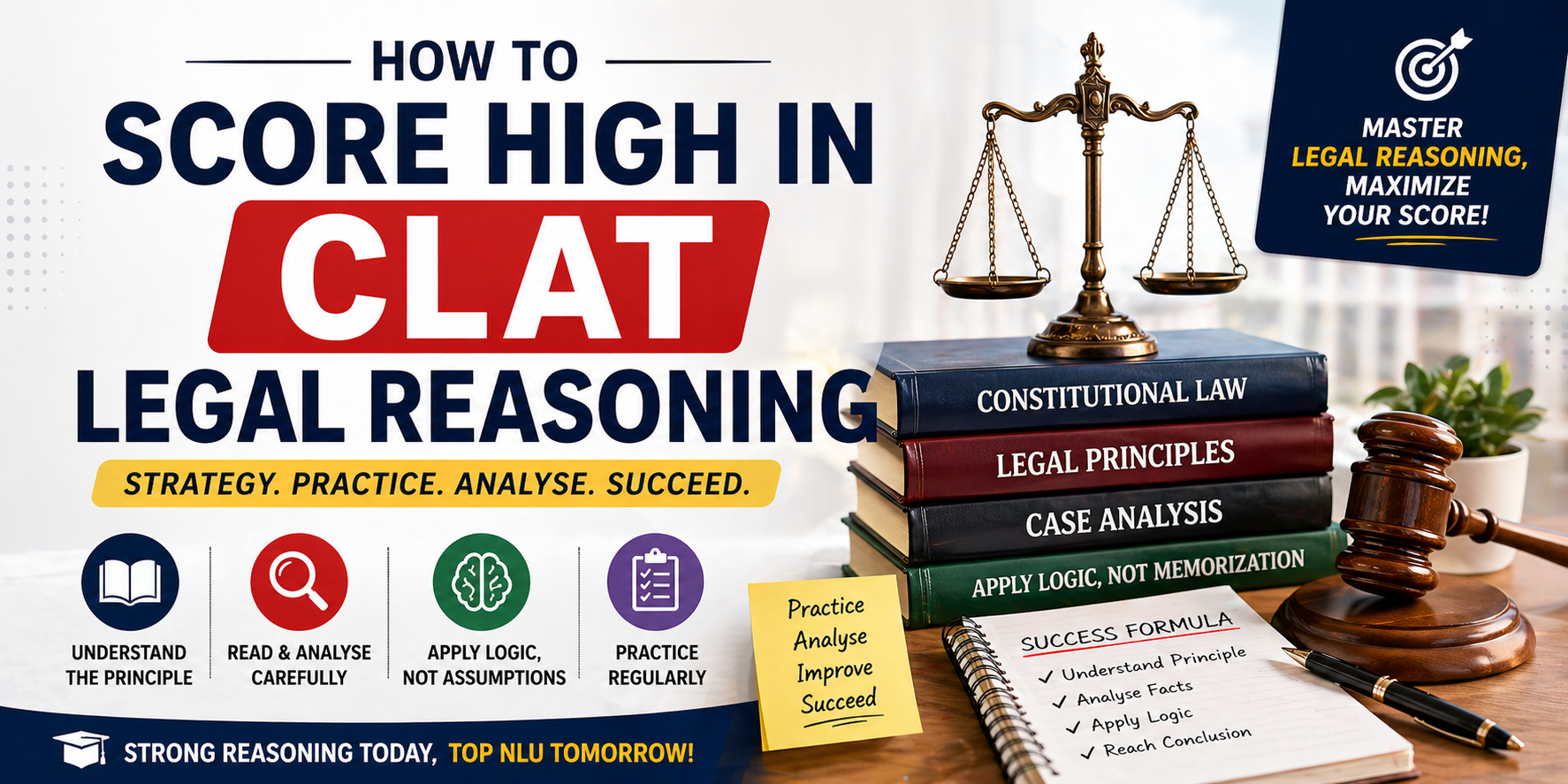
CLAT Legal Reasoning Preparation: Complete Guide to Score High
A Complete Strategy, Tips, and Practice Methods for CLAT Aspirants
The Legal Reasoning section is one of the most important parts of the Common Law Admission Test (CLAT). It usually contains 28–32 questions, making it one of the highest-scoring sections of the exam.
Many students assume they need prior knowledge of law to score well in Legal Reasoning. However, the reality is that CLAT does not test legal knowledge but legal aptitude—your ability to read, interpret, and apply legal principles logically.
In this article, we will discuss effective strategies, preparation tips, and practice methods to score high in the CLAT Legal Reasoning section.
Understanding the CLAT Legal Reasoning Section
In the Common Law Admission Test, the Legal Reasoning section is entirely passage-based.
Each passage generally includes:
i. A legal principle or rule
ii. A scenario or case situation
iii. Questions asking you to apply the principle logically
Students are expected to analyse the principle given in the passage and apply it correctly, rather than relying on prior legal knowledge.
Typical topics include:
i. Constitutional law
ii. Contract law
iii. Criminal law
iv. Legal ethics
v. Contemporary legal issues
Why Legal Reasoning Is a Scoring Section
Legal Reasoning is considered a scoring section because:
✔ The answers are based on logic and reasoning
✔ Questions follow clear principles
✔ Practice significantly improves performance
Students who develop strong analytical skills can easily score 25+ marks in this section.
Step 1: Focus on Understanding the Principle
Every legal reasoning passage contains a principle or rule of law.
Your first task is to identify the principle clearly.
Example principle:
“A person is guilty of theft if they dishonestly take property belonging to another person without consent.”
Questions will then present situations where you must decide whether the principle applies.
The key is to stick strictly to the principle given in the passage, even if it contradicts your general knowledge.
Step 2: Read the Passage Carefully
Many students make mistakes because they read the passage too quickly.
To score well:
i. Identify the main rule or legal principle
ii. Pay attention to exceptions or conditions
iii. Understand the context of the rule
Even a small detail can change the correct answer.
Step 3: Apply the Principle Logically
After understanding the rule, apply it logically to the given situation.
Ask yourself:
i. Does the scenario satisfy the conditions of the principle?
ii. Are there exceptions mentioned in the passage?
iii. Does the situation fully or partially match the rule?
Avoid using outside legal knowledge.
CLAT questions are designed so that all required information is already present in the passage.
Step 4: Improve Reading Speed
Legal Reasoning passages are usually long and complex.
Improving reading speed helps you:
✔ save time during the exam
✔ attempt more questions
✔ reduce stress
Students should practice reading legal and editorial articles from sources like:
i. The Hindu
ii. The Indian Express
This improves familiarity with legal language and argumentative writing.
Step 5: Practice Previous Year CLAT Questions
The best preparation strategy is to solve previous year papers of the Common Law Admission Test.
This helps students:
i. understand question patterns
ii. identify frequently tested concepts
iii. improve accuracy
While practicing, focus on:
i. analysing mistakes
ii. understanding the reasoning behind correct answers
iii. identifying recurring question types.
Step 6: Attempt Regular Sectional Tests
Sectional tests help students build speed and accuracy in Legal Reasoning.
A good practice routine includes:
i. solving 3–4 legal passages daily
ii. attempting weekly sectional tests
iii. analysing incorrect answers carefully.
Consistent practice strengthens analytical thinking and logical interpretation.
Step 7: Stay Updated with Legal Developments
Although CLAT does not require detailed legal knowledge, having basic awareness of legal and constitutional issues is helpful.
Students should follow news related to:
i. important Supreme Court judgments
ii. constitutional debates
iii. major legal reforms.
Reading legal news also improves understanding of real-world legal reasoning.
Common Mistakes Students Should Avoid
Many CLAT aspirants lose marks in Legal Reasoning because of these mistakes:
❌ Using outside legal knowledge
❌ Ignoring exceptions in the passage
❌ Misinterpreting the legal principle
❌ Rushing through passages without understanding
Remember that CLAT tests reasoning ability, not memorization of law.
Daily Practice Routine for Legal Reasoning
A simple daily routine can significantly improve performance.
Daily Practice Plan
i. Read 1 legal editorial or article
ii. Solve 3–4 legal reasoning passages
iii. Review mistakes carefully
Weekly Practice
i. Attempt 1 full sectional test
ii. Analyse incorrect answers
Consistency is more important than long study hours.
Final Advice for CLAT Aspirants
To score high in the Legal Reasoning section of the **Common Law Admission Test, students should focus on understanding principles, improving reading skills, and practicing regularly.
With disciplined preparation, it is possible to turn Legal Reasoning into one of the most scoring sections in CLAT.
Remember:
✔ Understand the principle carefully
✔ Apply logic, not outside knowledge
✔ Practice passages regularly
✔ Analyse mistakes thoroughly
With consistent effort, aspirants can significantly improve their Legal Reasoning score and increase their chances of securing admission in prestigious National Law Universities.
✅ Pro Tip: Students who practice 3–4 legal passages daily for 3–4 months usually see a major improvement in accuracy and confidence.